Biodegradable Food Packaging vs Plastic: A Cost Comparison for Small Businesses
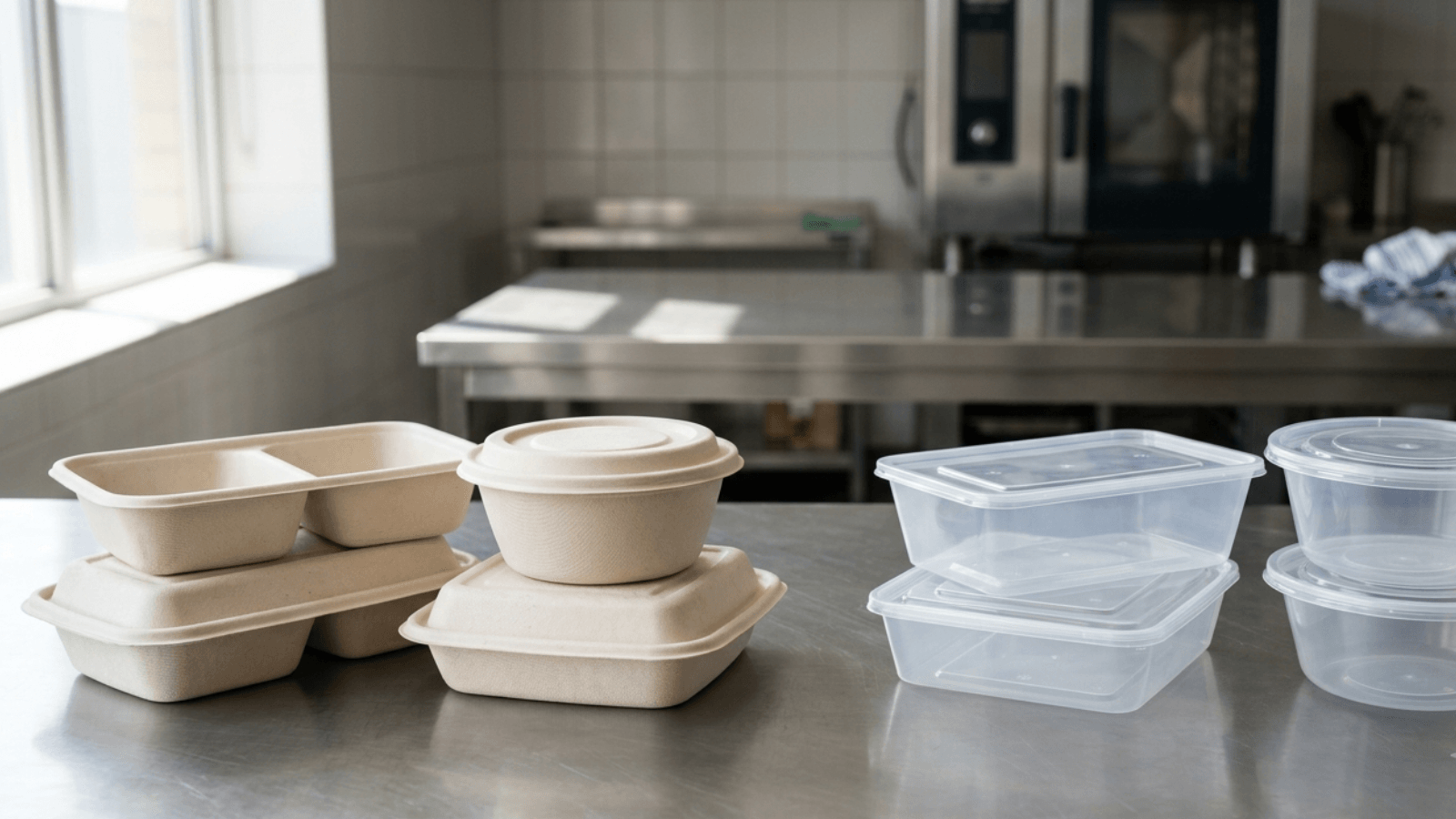
The first question most small food businesses ask when considering biodegradable packaging is a simple one: how much more will this cost per unit. It is a fair question, and the honest answer is that biodegradable packaging usually does cost more upfront. What gets missed in that quick comparison is everything that sits outside the per-unit price, and for many small F&B operators, that wider picture changes the decision entirely.
The Real Price Gap Between Biodegradable and Plastic
On a straight unit basis, biodegradable containers such as bagasse clamshells or PLA-lined cups typically carry a premium over standard plastic equivalents. Industry cost breakdowns generally place this premium somewhere between 15 and 40 percent depending on the product category, with high-volume items like takeaway containers sitting toward the lower end as manufacturing scale improves.
A detailed cost breakdown of biodegradable versus plastic packaging shows that this gap has been narrowing over the past few years as bagasse production scales up and plastic prices face their own upward pressure from raw material and regulatory costs, which is a trend worth watching rather than a fixed number to plan around.
|
Packaging Type |
Typical Price vs Plastic |
Where the Gap Is Smallest |
|
Bagasse containers |
20 to 30 percent higher |
High-volume takeaway boxes |
|
PLA-lined paper cups |
10 to 20 percent higher |
Hot beverage cups |
|
Compostable cutlery |
25 to 40 percent higher |
Bulk institutional orders |
Where the Extra Upfront Cost Gets Recovered
Unit price alone tells an incomplete story for any business operating under India's Extended Producer Responsibility rules or in states with active single-use plastic restrictions. Businesses using conventional plastic packaging in these jurisdictions face compliance costs, potential penalties, and in some cases direct plastic waste fees that do not show up on the packaging invoice but do show up on the overall cost of running the business.
There is also a customer-facing side to this. Diners and delivery customers increasingly notice packaging choices, and a growing share are willing to pay slightly more or choose a vendor specifically because of visible sustainability efforts. This does not offset the entire cost premium for every business, but for restaurants and cloud kitchens competing on more than just price, it is a real factor worth weighing alongside the raw numbers.
Waste disposal costs are another line item that rarely gets factored into the initial comparison. Municipalities in several Indian cities have started differentiating collection charges based on waste type, and businesses generating large volumes of non-recyclable plastic packaging can face steeper disposal costs over a year than the packaging premium would suggest on its own. For a mid-sized restaurant producing a few hundred takeaway orders daily, this adds up over twelve months in a way that a single unit price comparison simply does not capture.
Volume Matters More Than Most Small Businesses Expect
Pricing on biodegradable packaging tends to improve meaningfully with order volume, often more steeply than with conventional plastic, since production runs for compostable materials still benefit heavily from batch efficiency at current manufacturing scale. A small business ordering in small, frequent batches often pays close to the higher end of the price premium, while the same business consolidating into fewer, larger orders can bring that premium down noticeably.
This makes forecasting and bulk purchasing more valuable for biodegradable packaging than it typically is for plastic, where price differences between order sizes tend to be smaller. Small F&B businesses that plan packaging orders quarterly rather than weekly, and that coordinate with a few other nearby vendors for shared bulk orders where possible, often see a noticeably smaller gap than the headline percentage suggests.
Compostable vs Biodegradable: A Distinction Worth Getting Right
Procurement teams often use these two terms interchangeably, which creates confusion when a supplier's marketing claims do not match what actually happens to the product after disposal. Biodegradable simply means a material will break down over time, which could take months or years depending on conditions. Compostable is a stricter claim, meaning the material breaks down within a defined timeframe under specific composting conditions and leaves no harmful residue.
For a small business, this distinction matters most when a customer or regulator asks for proof. A container marketed as biodegradable without a compostability certification may satisfy a general sustainability goal but will not hold up against stricter procurement requirements from institutional buyers or corporate clients who specifically require certified compostable packaging in their vendor contracts.
Practical First Switches for Small F&B Businesses
Rather than replacing an entire packaging range at once, most small operators get better results by identifying the highest-volume item first and switching that single line before expanding further. This limits the initial cost impact while still delivering a visible sustainability change that customers notice.
|
Business Type |
Sensible First Switch |
|
Cloud kitchens and delivery |
Main course containers, since these move highest volume |
|
Cafes and quick service |
Hot beverage cups, where the cost gap is smallest |
|
Catering and events |
Cutlery and plates, which are highly visible to guests |
Businesses exploring a full switch can browse the eco food and beverage packing range to compare container types and see which categories offer the smallest price gap relative to the plastic equivalents currently in use.
Working Certification Into the Buying Decision
Labels on packaging can be confusing, and not every green-looking claim carries a verified certification behind it. Checking for recognised compostability standards, rather than relying on a package simply looking eco-friendly, protects a business from having to walk back a sustainability claim later if a customer or auditor asks for documentation.
This is particularly relevant for institutional buyers, schools, and corporate clients who increasingly build certified sustainable packaging into their vendor requirements. A supplier who can provide documentation alongside the product saves considerable back-and-forth during procurement approval, which is often a bigger practical hurdle than the price difference itself.
Evaluating Suppliers Beyond the Quoted Price
Two suppliers quoting similar per-unit prices for biodegradable containers can differ substantially in what that price actually includes. Some quotes cover only the base material cost and add printing, minimum order quantities, or delivery separately, while others bundle these into a single figure. Comparing quotes without checking what is bundled in leads many small businesses to select a supplier based on an incomplete number, only to find the effective cost higher once the additional line items appear on the actual invoice.
Lead time is another factor that matters more for biodegradable packaging than it typically does for plastic, since fewer manufacturers currently produce compostable containers at scale in India compared to the number producing standard plastic equivalents. A business switching packaging lines close to a peak season, such as the festive months, should build in extra lead time to avoid a stock gap right when order volumes are highest.
Building the Business Case Beyond the Invoice
When a small business owner presents a packaging switch to a finance-conscious partner or manager, framing it purely as an added cost tends to meet resistance. Framing it instead as a comparison of total cost, factoring in avoided plastic fees, reduced disposal costs in jurisdictions that charge for it, and the customer retention value of a visibly sustainable brand, usually tells a more complete and more persuasive story.
None of this means every business should switch every packaging line overnight. It means the decision is rarely as simple as comparing two unit prices side by side, and businesses that look at the fuller picture tend to make choices that hold up better over the following few years rather than needing to be revisited every time plastic regulations tighten further.
Setting a Realistic Transition Timeline
Businesses that succeed with a packaging switch rarely treat it as a single event. A more realistic approach spreads the transition across two to three quarters, starting with the highest-volume item, monitoring the actual cost impact against forecasts for a full billing cycle, and then expanding to secondary packaging lines once the numbers are confirmed rather than assumed. This also gives staff time to adjust handling procedures, since some compostable materials behave slightly differently under heat or moisture compared to their plastic equivalents.
Rushing a full catalogue switch in a single order cycle tends to produce two common problems: a larger than expected invoice shock in the first quarter, and operational friction if staff are not prepared for containers that seal, stack, or hold heat differently than what they are used to. A phased timeline avoids both.