Preparing Commercial Kitchens for Fire Safety Audits Before Festive Season
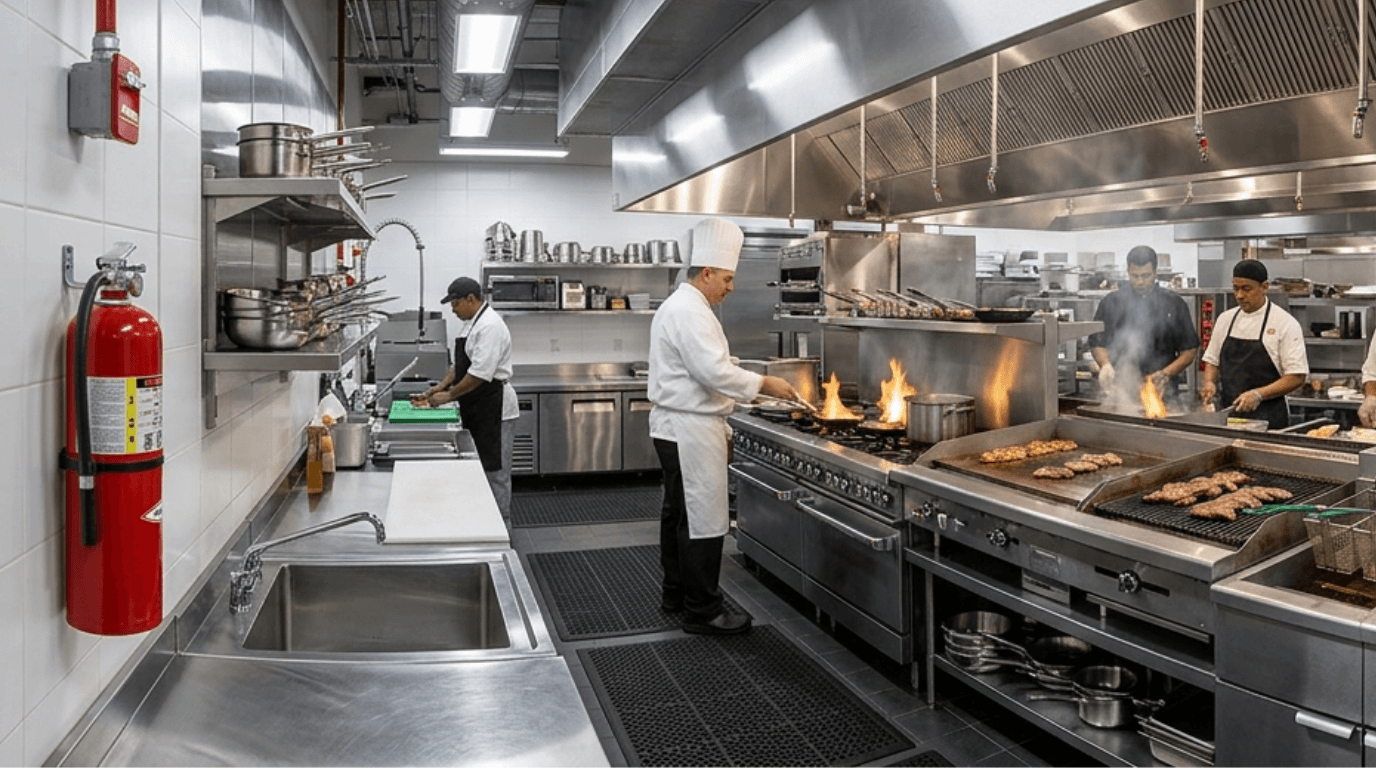
Preparing Commercial Kitchens for Fire Safety Audits Before Festive Season
Festive season brings a predictable surge in restaurant and catering volume, longer service hours, higher kitchen throughput, and often temporary staff brought on to handle the load. It is also, not coincidentally, when fire safety audits tend to intensify, since regulatory bodies and insurers know that peak-season kitchens carry meaningfully higher fire risk than a typical operating day. A kitchen caught underprepared during this window faces more than a failed audit, it faces genuine operational risk during its busiest, most profitable weeks of the year.
This guide focuses specifically on preparing a commercial kitchen for a fire safety audit ahead of festive season, not general kitchen safety practices year-round.
Why Festive Season Raises Fire Risk Specifically
Commercial kitchen fire risk does not stay constant throughout the year, it spikes during high-volume periods for identifiable reasons. Extended operating hours mean equipment runs longer without the cooling-down periods it gets during quieter months. Higher order volume means more simultaneous burner and fryer use, increasing both grease accumulation rate and electrical load. Temporary or newly hired staff, common during festive hiring pushes, are statistically more likely to make safety-relevant mistakes simply due to unfamiliarity with a specific kitchen’s layout and equipment.
|
Festive Season Factor |
Fire Risk Impact |
|---|---|
|
Extended operating hours |
Equipment runs hotter and longer without standard cooldown |
|
Higher simultaneous equipment use |
Increased grease buildup rate and electrical load |
|
Temporary or new staff |
Higher likelihood of unfamiliarity-driven safety lapses |
What a Pre-Audit Self-Assessment Should Cover
Before an official audit arrives, running an honest internal self-assessment against the same criteria an inspector will use catches gaps while there is still time to fix them, rather than discovering issues during the audit itself.
Fire Suppression System Coverage
Confirm that kitchen hood suppression systems cover every cooking line currently in active use, including any new equipment or line configurations added since the last inspection. Kitchens that have expanded their cooking capacity for festive volume, adding temporary additional burners or fryers, sometimes inadvertently create coverage gaps if the suppression system was designed around the original, smaller equipment layout.
Suppression System Service Currency
Fire suppression systems require regular professional servicing, typically every six months for commercial kitchen hood systems, to remain certified and functional. Checking the service tag date on every suppression system component before audit season, rather than assuming the last service is still within window, avoids a straightforward but common audit failure.
Fire Extinguisher Placement and Charge
Every fire extinguisher in the kitchen should be checked for current charge status, visible on the pressure gauge, and confirmed to be mounted in an accessible, clearly marked location, not obstructed by newly added equipment or festive-season storage overflow, a common issue when kitchens temporarily reorganise space to handle increased inventory.
|
Self-Assessment Area |
What to Verify |
|---|---|
|
Suppression system coverage |
All active cooking lines, including festive-season additions, are covered |
|
Service currency |
Suppression system service tags are within the required interval |
|
Extinguisher status |
Charged, accessible, unobstructed, and clearly marked |
Grease Buildup on Hoods and Ductwork
Grease accumulation is one of the most common fire risk factors flagged during commercial kitchen audits, and festive-season volume accelerates buildup rate considerably compared to normal operating months. A hood and ductwork cleaning scheduled specifically ahead of festive season, rather than relying on the standard quarterly cleaning cycle alone, addresses this accelerated buildup before an audit, or worse, an actual fire, catches it.
Emergency Exit and Egress Clearance
Temporary festive-season storage, extra inventory, seasonal packaging materials, disposable serving equipment, has a tendency to encroach on emergency exit pathways if not deliberately managed. Confirming that all emergency exits and the pathways leading to them remain fully clear, even during peak inventory periods, is both an audit requirement and a genuine safety necessity.
Staff Training Currency
Any temporary or newly hired staff brought on for festive season should receive fire safety orientation specific to that kitchen, extinguisher locations, emergency shutdown procedures, evacuation routes, before their first shift, not as an afterthought once the season is already underway. Auditors frequently ask staff directly about fire safety procedures during an inspection, and inconsistent or uncertain answers from newer staff members reflect poorly regardless of how well-maintained the physical equipment is.
Building a Pre-Festive Audit Checklist
Consolidating the above into a structured checklist, reviewed a few weeks ahead of peak festive volume rather than the week before an anticipated audit, gives adequate time to address any gaps found.
|
Checklist Item |
Target Completion |
|---|---|
|
Suppression system coverage review |
3-4 weeks before festive peak |
|
Suppression system professional service |
Confirmed current, scheduled if due |
|
Fire extinguisher inspection |
2-3 weeks before festive peak |
|
Hood and ductwork cleaning |
2-3 weeks before festive peak |
|
Emergency egress clearance check |
Ongoing, re-checked weekly during festive season |
|
New/temporary staff fire safety orientation |
Before first shift, not after |
[custom_form_block title=“Book a pre-season fire audit”]
What Happens When an Audit Finds Gaps
If a self-assessment or an actual audit uncovers gaps, the response matters as much as the initial preparation. Addressing flagged issues immediately, rather than treating a failed or conditional audit result as something to revisit after festive season concludes, is both a genuine safety necessity and often a regulatory requirement with its own compliance deadline. Kitchens that treat audit findings as a checkbox to defer rather than a genuine risk to address immediately are the ones most likely to face a serious incident during exactly the high-volume period the audit was meant to protect against.
Our fire safety product range covers suppression system components, extinguishers, and related commercial kitchen safety equipment for facilities preparing ahead of a festive-season audit. For general background on how commercial kitchen fire risk is assessed and regulated, this overview of fire safety covers the broader regulatory and risk management principles this kind of pre-season preparation is built around.
Festive season fire safety audits are predictable, they arrive at roughly the same time every year, for the same well-understood reasons. Kitchens that treat pre-audit preparation as a genuine priority weeks in advance, rather than a last-minute scramble, protect both their audit outcome and, more importantly, the safety of their busiest, highest-stakes operating period of the year.
SEO Information
|
Field |
Details |
|---|---|
|
SEO Title |
Getting Your Commercial Kitchen Ready for a Fire Safety Audit |
|
Meta Description |
Preparing for a festive-season fire safety audit? Here is a practical checklist covering suppression systems, extinguishers, and staff readiness. |
|
SEO Slug |
/commercial-kitchen-fire-safety-audit-preparation |
|
Category |
Fire Safety |
Date: 31-Aug-2026 | Category: Fire Safety | Content Type: Practical Guide | Target Audience: Restaurant owners, Facility managers | Week Theme: Not specified
Hero Image Prompt: A commercial kitchen with a visible fire suppression hood system above cooking lines, a fire extinguisher mounted on a nearby wall, clean industrial kitchen lighting, realistic commercial photography style, no text overlays.