Compostable Cutlery for Events: A Buying Guide for Event Planners
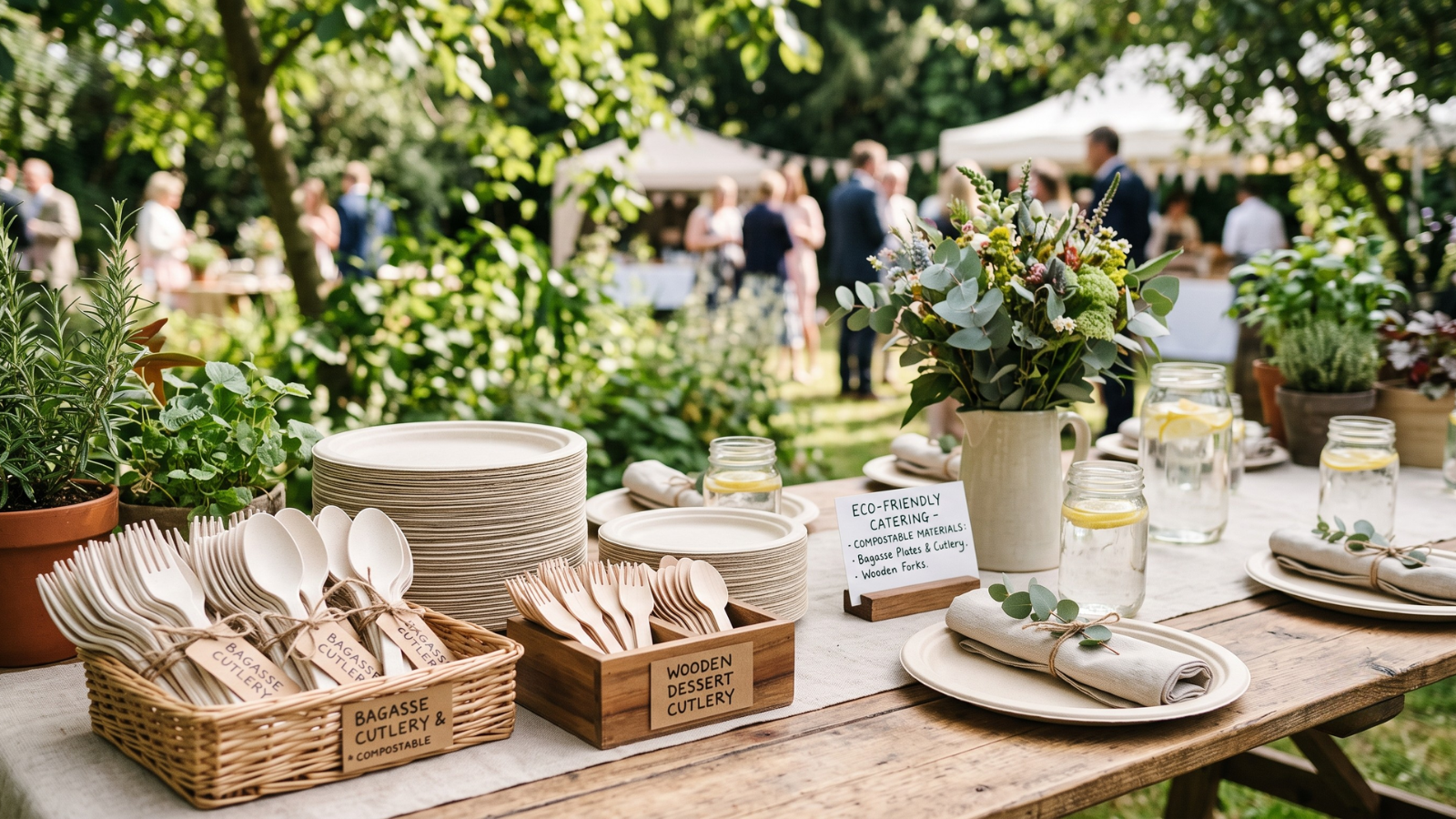
Event planners juggling a hundred small decisions before doorstop rarely have time to think through cutlery, until a client asks why the catering still uses plastic forks. Compostable cutlery has moved from a niche add-on to a standard client request, and getting the sourcing right the first time saves you from last-minute scrambles and awkward conversations about melting spoons at a summer wedding.
Why Compostable Cutlery Has Become a Standard Ask
Corporate clients now write sustainability clauses into event contracts, and wedding couples increasingly ask caterers directly about disposable waste. Compostable cutlery answers both concerns without changing how a catering team works the floor. Unlike reusable steel service, there is no washing, no breakage liability, and no risk of pieces going missing between courses. For planners handling back-to-back events, that convenience matters as much as the environmental angle.
The shift also reflects tightening state-level rules on single-use plastics at public venues across India, which has pushed many convention centres and marriage halls to insist on compostable service ware as a condition of booking.
Material Types and What They Mean for Your Event
Not all compostable cutlery behaves the same way, and the differences show up exactly when you need reliability most, mid-service, under load, in whatever weather the day brings.
|
Material |
Best Suited For |
Watch Out For |
|
Cornstarch (PLA) blend |
Cold food, desserts, salads |
Softens near hot food or direct sun |
|
Bagasse-reinforced cutlery |
Hot mains, curries, biryani stations |
Slightly thicker feel than plastic |
|
Wooden cutlery |
Formal plated dinners, dessert bars |
Higher per-unit cost at scale |
For a typical wedding or corporate gala with a mixed hot-and-cold menu, most caterers land on a bagasse-based fork and spoon set paired with wooden cutlery for the dessert table, since it photographs well and holds up under warm lighting for hours.
Sizing the Order Without Overbuying
Underordering cutlery mid-event is one of the more visible mistakes a planner can make, and overordering ties up budget in stock that expires slowly on a shelf. A safe planning ratio is one full set per guest plus a ten to fifteen percent buffer for buffet-style events where guests tend to grab extra spoons for shared dishes. Sit-down formats need less buffer since service is controlled course by course.
Dhuriyam Corp's eco food and beverage packing range groups cutlery by material and pack size, which makes it easier to line up an order sheet against a guest count instead of guessing from a generic catalogue.
Checking Certification Before You Commit to a Bulk Order
Compostable is a claim that needs backing, not a marketing word to take at face value. Look for third-party compostability certification on the packaging or spec sheet rather than relying on a supplier's own description. The Biodegradable Products Institute maintains a public list of certified compostable products, and cross-checking a supplier's SKU against that registry takes a few minutes and avoids an awkward situation if a client's sustainability audit later asks for proof.
The BPI certified products directory is a useful reference point when comparing vendor claims side by side.
Storage and Shelf Life Before Events
Compostable cutlery doesn't spoil like food, but it isn't indefinitely stable either. Cornstarch-based pieces can become brittle if stored in very dry, air-conditioned storage rooms for long stretches, while bagasse and wooden cutlery are more forgiving. Keep stock in its original sealed packaging until a week or so before the event, store away from direct heat sources such as kitchen exhaust vents, and avoid stacking heavy catering equipment on top of boxes, since compostable cutlery is generally less rigid under pressure than plastic.
Comparing Suppliers on More Than Price Per Piece
|
Comparison Point |
Why It Matters |
Quick Check |
|
Certification |
Confirms genuine compostability |
Ask for the BPI or equivalent certificate |
|
Minimum order quantity |
Affects cash flow for smaller events |
Confirm MOQ matches your typical guest count |
|
Lead time |
Prevents last-minute stock gaps |
Ask for dispatch timelines during festive season |
Price per piece is the number most planners compare first, but it rarely tells the full story. A supplier offering a slightly higher unit price with a shorter, more reliable lead time is often the better choice during the wedding and festive season, when demand across the industry spikes and slower suppliers run out of stock exactly when you need it most.
Handling the Client Conversation
Clients who ask for compostable service ware are usually looking for reassurance more than a technical explanation. A short line in your proposal, noting the material used and its certification, tends to satisfy the question without turning into a lecture on packaging science. Keep a one-page comparison sheet handy for clients who want more detail, since some corporate procurement teams do ask for documentation to attach to their own internal sustainability reporting.
Getting cutlery sourcing right is a small operational detail with a disproportionately large effect on how smoothly service runs and how a client remembers the event. Once you have a reliable supplier and a sizing formula that matches your typical event format, this becomes one less thing to think about on the day itself.