Compostable Straws: Do They Actually Break Down in Time
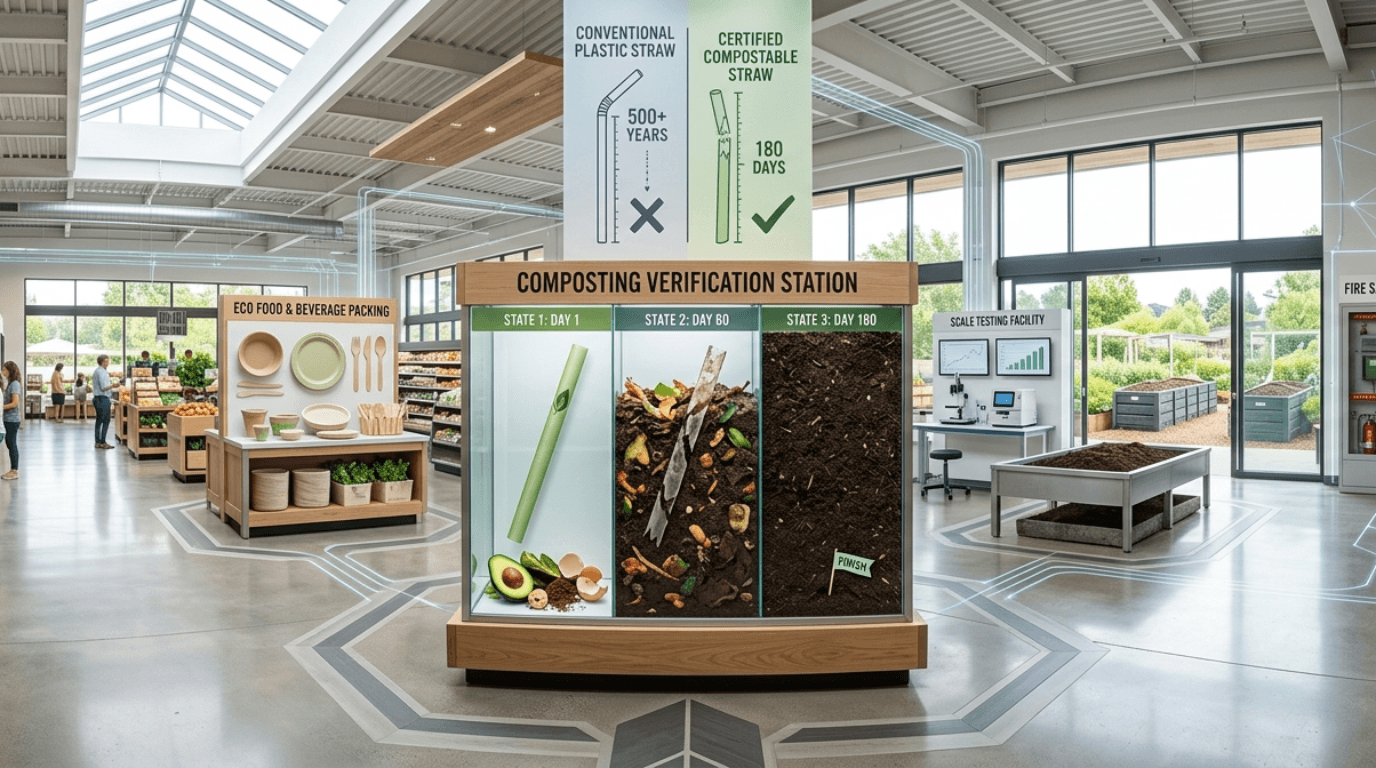
Compostable straws are marketed with a lot of confidence, but F&B businesses switching from plastic often have one honest question that rarely gets a straight answer: how long do compostable straws actually take to break down, and will they hold up long enough in a drink before that happens. This guide separates the marketing claims from what actually happens with compostable straws in practice, both in use and after disposal.
What "Compostable" Actually Means Here
Compostable straws are typically made from PLA, a plant-based bioplastic derived from corn starch or sugarcane, or from paper with a compostable coating. Unlike the word biodegradable, which has no fixed timeframe attached to it, genuinely compostable products are expected to break down within a defined period, usually 90 to 180 days, but only under the right composting conditions. This distinction matters because a straw labelled biodegradable could technically take years to break down in a landfill, while a certified compostable one is tested against a specific standard and timeframe.
This is also where a lot of the compostable straw shelf life confusion starts. The composting timeline only applies once the straw reaches an actual composting facility, not while it sits in a drawer, in use, or in general landfill waste, which behaves very differently from a managed compost environment.
Home Composting vs Industrial Composting
This is the detail most product listings gloss over. PLA-based straws generally require industrial composting facilities, which maintain higher temperatures than a typical home compost bin can reach, to break down within the advertised window. Left in a home compost pile, a PLA straw can take considerably longer, sometimes over a year, since home setups rarely hit the sustained heat that industrial facilities are designed to maintain.
Paper-based compostable straws with a plant-based coating tend to break down more easily in home compost conditions, though they generally hold up for a shorter time in an actual drink before softening, which is a tradeoff worth weighing depending on your typical service time per customer.
|
Straw Type |
Compost Environment Needed |
Typical Breakdown Time |
|
PLA bioplastic straw |
Industrial composting facility |
90 to 180 days |
|
Paper with plant coating |
Home or industrial compost |
60 to 120 days |
|
Standard plastic straw |
Does not compost |
200+ years, landfill only |
[custom_form_block title="Request eco packaging samples now"]
How They Perform While Actually in Use
This is where the do compostable straws work question really gets tested. Quality PLA straws hold their shape well in cold drinks for a reasonable service duration, typically comparable to standard plastic straws for the length of one drink. In hot beverages, however, PLA straws soften and can lose structural integrity faster, which is why they are generally recommended for cold drinks rather than hot ones, unlike some paper straws designed specifically to handle heat.
For businesses serving both hot and cold beverages, stocking two straw types rather than trying to find one straw that handles everything well is usually the more reliable approach, even though it adds a small layer of inventory complexity.
Common Biodegradable Straw Myths Worth Clearing Up
A few biodegradable straw myths persist even among procurement teams actively trying to make sustainable choices. One is that any plant-based material automatically composts quickly regardless of conditions, which is not accurate given the industrial versus home composting distinction above. Another is that compostable straws can be recycled alongside plastic, which they cannot, since mixing PLA into a plastic recycling stream actually contaminates the batch. Clear signage or staff training on correct disposal at your business location makes a meaningful difference to whether these straws actually end up composted rather than in general landfill waste regardless of their materials.
According to guidance from the Central Pollution Control Board on compostable plastic standards, products claiming compostability in India should be certified against a recognised standard, which is worth confirming with any supplier before switching your business over at scale.
What This Means for Procurement Decisions
For F&B businesses and procurement managers, the practical takeaway is straightforward: check whether your local waste management has access to industrial composting before assuming PLA straws will break down as advertised, confirm supplier certification against a recognised compostable standard, and match straw type to your drink menu rather than picking one option for everything. Getting these three details right avoids the common disappointment of switching to compostable straws expecting an environmental win, only to have them end up in general landfill where they behave closer to standard plastic than the label suggests.