Fire Risk in Data Centres: Specialised Suppression Systems Explained
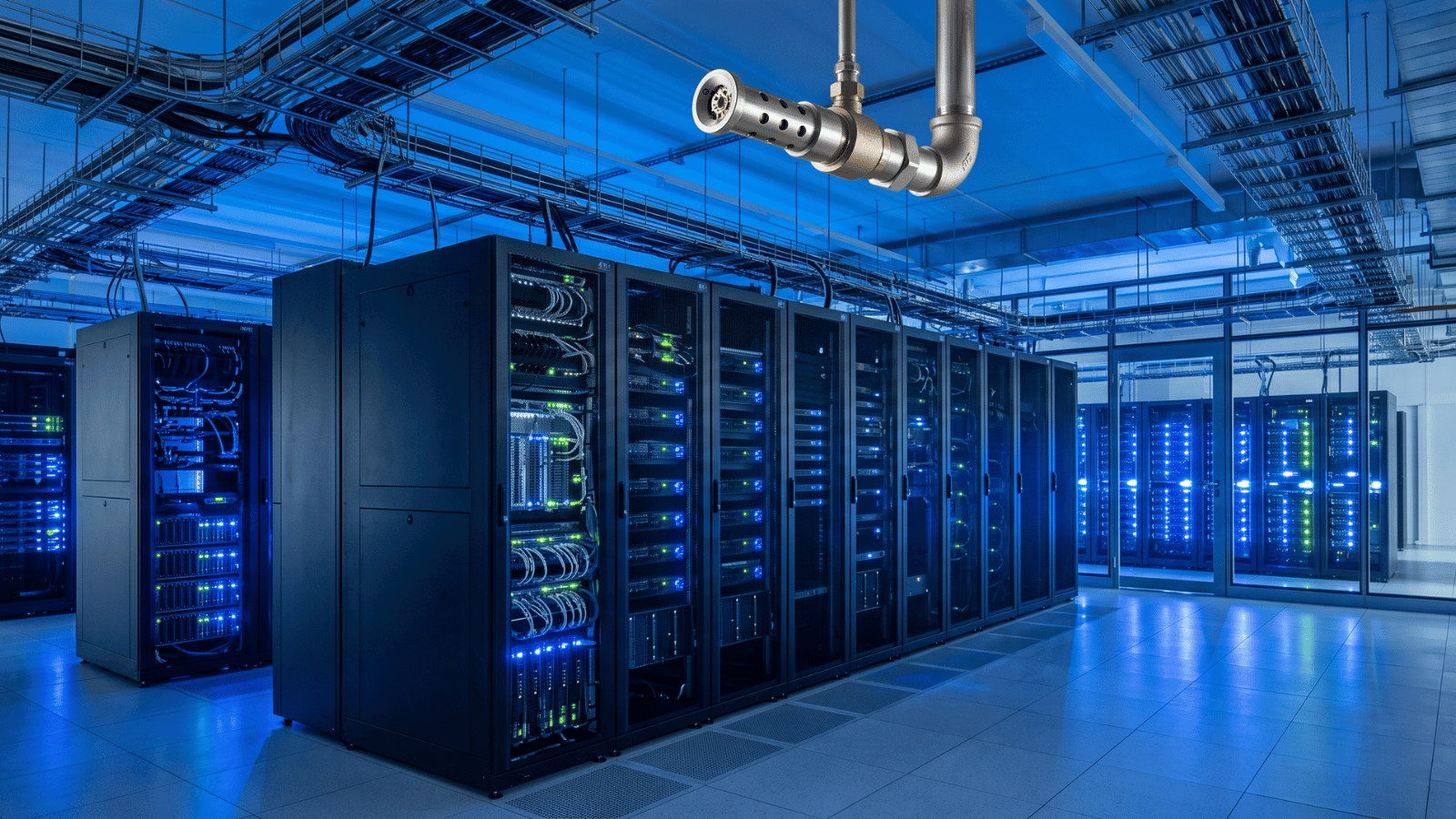
A data centre fire is a different risk profile from almost any other facility fire, not because the fire itself burns differently, but because the standard response to fire, water, is often more damaging to the asset than the fire it is meant to control. A sprinkler activation across a server room does not just address the fire, it can destroy racks of equipment that survived the fire itself, which is exactly why data centres rely on a different category of suppression entirely.
Why Standard Suppression Does Not Work Here
Water based sprinkler systems, the default in most commercial buildings, pose an unacceptable risk to electronic equipment, and even the alternative of a total flooding CO2 system, while effective at suppressing fire, displaces oxygen in a way that is dangerous for any personnel present when the system activates. Data centres need suppression that puts out fire effectively without water damage and without creating a life safety hazard for staff who might be in the room, which is a narrower set of requirements than most facilities need to meet.
Clean Agent Suppression: The Standard Approach
Clean agent fire suppression systems use gaseous agents that suppress fire by removing heat or interrupting the chemical reaction of combustion, without leaving residue and without the water damage risk of a sprinkler system. These agents are also designed to be used at concentrations safe for occupied spaces, addressing the oxygen displacement concern that rules out simple CO2 flooding for continuously staffed environments. This combination, effective suppression without equipment or personnel risk, is why clean agent systems have become the standard for data centre fire protection.
|
Suppression Type |
Data Centre Suitability |
Key Limitation |
|
Water Sprinkler |
Not suitable |
Destroys electronic equipment |
|
Total Flooding CO2 |
Limited suitability |
Oxygen displacement risk for occupied spaces |
|
Clean Agent Systems |
Standard choice |
Higher upfront cost, requires proper room sealing |
Early Detection Matters as Much as Suppression
A suppression system is only as effective as the detection system triggering it, and data centres typically pair clean agent suppression with very early smoke detection, systems sensitive enough to catch a developing issue at the smouldering stage, well before an open flame or heavy smoke would trigger a conventional detector. This early warning gives facility staff time to investigate and potentially resolve a developing issue, such as an overheating component, before suppression activation becomes necessary at all.
Room Sealing and System Design Considerations
Clean agent systems depend on the protected space holding the suppression agent's concentration long enough to be effective, which means room sealing, including cable penetrations, raised floor gaps, and ceiling voids, needs to be assessed as part of the system design rather than as an afterthought. A data centre with significant unsealed gaps will not retain suppression agent concentration effectively, undermining the system's performance regardless of how well specified the suppression agent itself is.
- Never rely on water sprinkler systems as primary protection in a server room environment
- Pair suppression with very early smoke detection to catch issues before activation is needed
- Assess room sealing, cable penetrations and raised floor gaps, as part of system design
- Verify suppression agent concentration and hold time meet the specific room volume being protected
Planning Around Growth and Room Changes
Data centres change over time, additional racks, expanded raised floor space, new cable runs, and a suppression system designed for the original room configuration may not adequately cover an expanded footprint without reassessment. Building a periodic review of suppression system coverage into facility maintenance planning, rather than treating installation as a one time event, ensures protection keeps pace with the space itself as it grows.
For facility managers planning or reviewing fire protection for server environments, understanding baseline requirements from a resource like the National Fire Protection Association is a useful starting point, alongside reviewing suitable fire suppression products matched to the specific room volume and equipment density of your facility.