Eco-Friendly Food Packaging for Restaurants: What to Switch to First
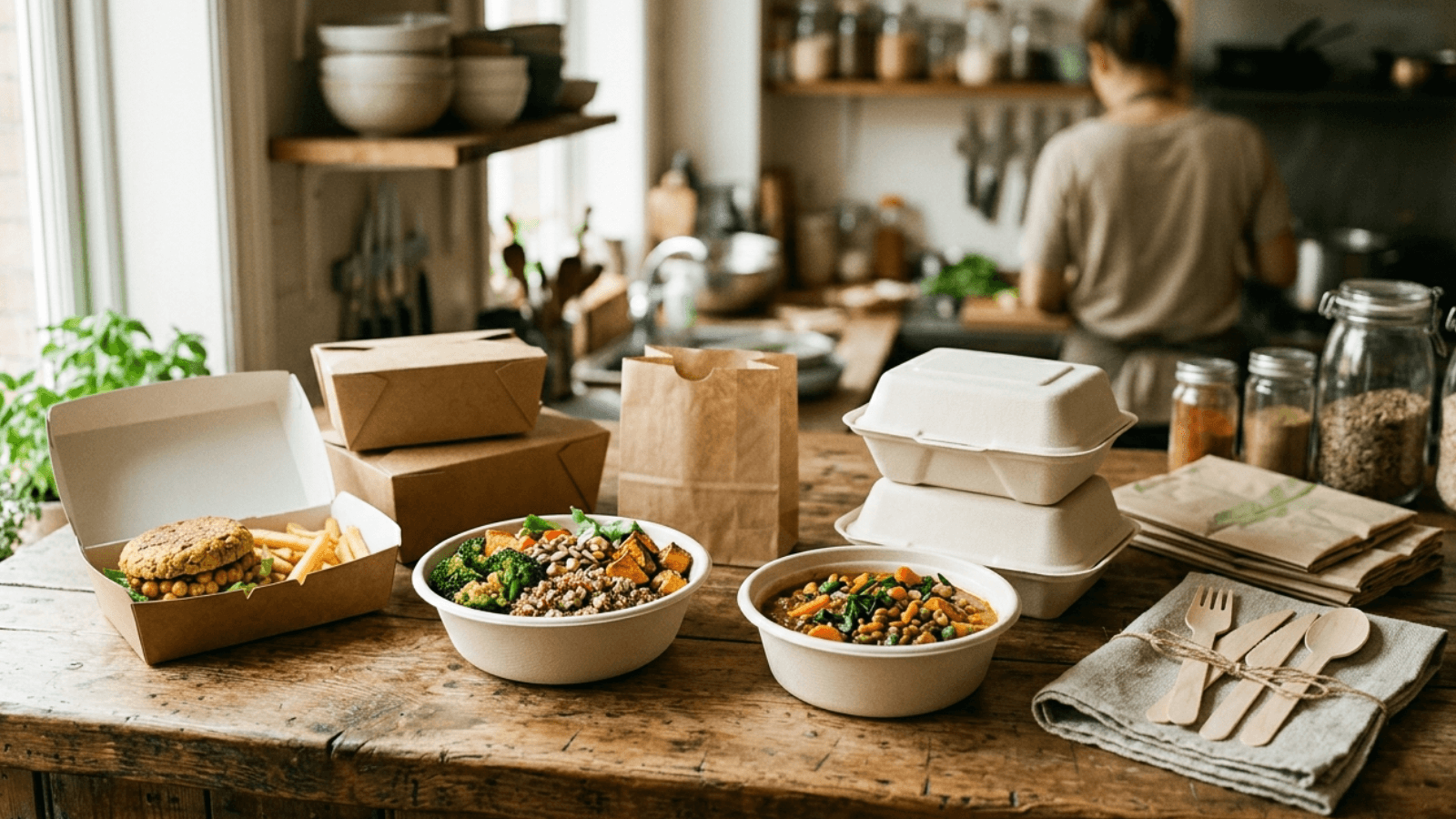
Most restaurant owners already know they need to move away from plastic packaging. What trips people up is not the decision itself, it is the order of operations. Switching every item in a kitchen at once is expensive, disruptive, and usually unnecessary. The smarter approach is to identify which packaging items carry the most risk and the most customer visibility, and start there.
Start With the Items Customers Actually See
Not all packaging carries equal weight in a customer's mind. A plastic carry bag or a foam container that a customer touches, opens, and throws away in front of you leaves a stronger impression than an inner wrapper they never notice. If budget is limited, prioritize the outward facing items first: takeaway containers, carry bags, and cutlery. These are also usually the items regulators check first during inspections, since they are the most visible form of single use plastic in food service.
Container Materials Worth Considering
Bagasse, which is made from sugarcane fiber left over after juice extraction, has become the default replacement for foam and plastic containers in Indian food service. It holds up well with hot and oily food, is microwave safe, and breaks down in commercial composting conditions. Kraft paper based containers with a compostable lining work well for drier items like sandwiches, baked goods, and salads, though they are a poor fit for anything heavy in oil or gravy unless the lining is rated for it.
Corn starch based containers are another option, particularly for cold food and desserts, but they tend to soften faster under heat than bagasse, so match the material to what is actually going inside it rather than picking one packaging line for the entire menu.
Carry Bags and Delivery Packaging
For carry bags, certified compostable bags under the IS 17088 standard are the safest choice from a compliance standpoint, not just an environmental one. Cloth or jute bags work for retail style takeaway but are not practical for a high volume delivery operation. For cloud kitchens and delivery heavy restaurants, look at insulated compostable delivery bags that keep food temperature stable without relying on plastic lining, since delivery complaints about cold food often lead operators back toward plastic out of habit rather than necessity.
Cutlery and Small Format Items
Wooden or bamboo cutlery is now widely available at a price point close to plastic, especially at bulk order volumes. Edible cutlery made from millet or wheat exists but is still a premium option better suited to specific promotional use than daily operations. Straws, stirrers, and small condiment containers are worth switching early since they were among the first items restricted under the national single use plastic phase out, and continuing to stock them creates unnecessary compliance risk.
Comparing the Common Switch Options
|
Packaging Type |
Best Use Case |
Watch Out For |
|---|---|---|
|
Bagasse containers |
Hot food, curries, oily dishes |
Slightly higher cost than foam |
|
Kraft paper with lining |
Dry food, bakery items |
Weak against heavy oil or gravy |
|
Compostable carry bags |
All takeaway and delivery orders |
Verify IS 17088 certification |
A Practical Rollout Order
Rather than switching everything on the same day, a phased approach tends to work better operationally. Begin with carry bags and cutlery since they are low cost to switch and highly visible to customers and inspectors alike. Move to takeaway containers next, testing a small batch against your actual menu items before committing to a full order, since not every eco friendly container performs the same way with every cuisine. Save condiment cups, wrapping films, and back of house packaging for the final phase, since these carry less immediate compliance pressure and give you time to compare suppliers on cost.
Keep a small stock of your old packaging during the transition window rather than switching every item cold turkey. This gives kitchen staff time to adjust portioning and sealing techniques, since compostable materials do not always behave identically to the plastic they are replacing.
What This Costs in Practice
Eco-friendly packaging typically runs somewhere between fifteen and forty percent more than conventional plastic, depending on the material and order volume. That gap narrows considerably at higher order quantities, which is why grouping your first order across containers, bags, and cutlery from a single supplier like Dhuriyam's eco food and beverage packaging range tends to work out more cost effective than sourcing each category separately.
Checking Certifications Before You Order
Not every product labeled eco friendly or biodegradable actually meets a recognized standard, and this is where a lot of restaurant owners get caught out after the fact. Look specifically for IS 17088 certification, which is the Bureau of Indian Standards specification for compostable plastics, or EN 13432 for suppliers working to the European standard. A supplier who cannot produce a certificate on request, or who only points to a general claim of biodegradability on the packaging itself, is a supplier worth being cautious about. Ask for the certificate before the first bulk order, not after an inspection raises the question for you.
It is also worth confirming disintegration timelines directly, since compostable does not automatically mean it breaks down in a home compost bin. Many certified compostable products are rated for industrial composting conditions specifically, which involves higher and more consistent temperatures than most municipal or backyard composting setups reach. This distinction matters if you are making sustainability claims to customers, since overstating what your packaging actually does can create its own reputational problem.
Matching Packaging to Restaurant Format
A quick service restaurant with high order volume and thin margins per order has different priorities than a fine dining establishment doing occasional takeaway. QSR operations generally benefit most from standardized bagasse containers in two or three sizes, since simplicity in ordering and stacking outweighs presentation. A cloud kitchen running multiple delivery brands out of one location should prioritize insulated compostable delivery bags and containers that hold temperature well over a longer delivery radius, since food quality complaints are the primary risk to the business model.
Fine dining and casual dining restaurants doing occasional takeaway can afford to prioritize presentation alongside sustainability, since customers ordering from a higher price point restaurant tend to notice packaging quality more directly. Kraft paper containers with visible branding space, or bagasse containers with a slightly more finished look, tend to suit this segment better than the utilitarian containers a QSR would choose.
Training Kitchen Staff for the Transition
Compostable materials do not always behave exactly like the plastic they replace, and staff who have packed food the same way for years will need a short adjustment period. Bagasse containers, for instance, can be more prone to leaking at the seams if overfilled compared to a molded plastic container, so portioning guidance may need a small update. Compostable bags also tend to have a slightly lower load capacity than thick plastic equivalents, which matters for heavier delivery orders with multiple containers.
A short briefing session covering which containers pair with which menu items, how much sealing pressure compostable lids need compared to plastic ones, and how to spot a container that is starting to soften under a hot, oily dish goes a long way toward avoiding customer complaints in the first few weeks after the switch.
Evaluating Suppliers Beyond Price
Price per unit is the easiest thing to compare between suppliers, and also the easiest way to make a poor decision. A supplier offering a lower price but inconsistent stock availability will cost more in the long run if it forces a restaurant to fall back on plastic during a shortage, which undoes the entire compliance and branding effort. Ask about minimum order quantities, typical lead times, and whether the supplier can commit to consistent specifications batch to batch, since a container that is a few millimeters different in height can throw off your existing lid stock.
It is also reasonable to ask a supplier for a small trial batch before committing to a full order. Testing a new container against your actual highest volume dishes for a week tells you more about real world performance than any spec sheet, and catches issues like leaking, sogginess, or odor absorption before they become a customer facing problem.
The restaurants that handle this switch smoothly are usually the ones that treat it as a phased operational change rather than a single large purchase decision. Getting the visible, high compliance risk items sorted first buys time to test and budget for the rest of the menu properly.