Eco-Friendly Stationery for Schools: What Actually Reduces Waste
Schools go through an enormous volume of stationery every academic year, and a large share of it is designed to be used once and thrown away. Switching to eco friendly options sounds like an easy win, but not every green labelled product actually reduces waste in a meaningful way once real classroom use is factored in. This guide looks at which eco friendly stationery choices genuinely cut waste for schools, rather than just carrying a sustainable label on the packaging.
Why Schools Are Rethinking Stationery Choices
Procurement teams at schools are increasingly expected to justify purchasing decisions on cost and environmental impact together, not cost alone. Parents and school boards are also paying closer attention to how much single use plastic and disposable paper products move through a classroom in a single term. This shift is pushing schools toward recycled paper, refillable pens, and more durable filing systems that hold up across an entire academic year instead of needing constant replacement.
What Actually Reduces Waste in Practice
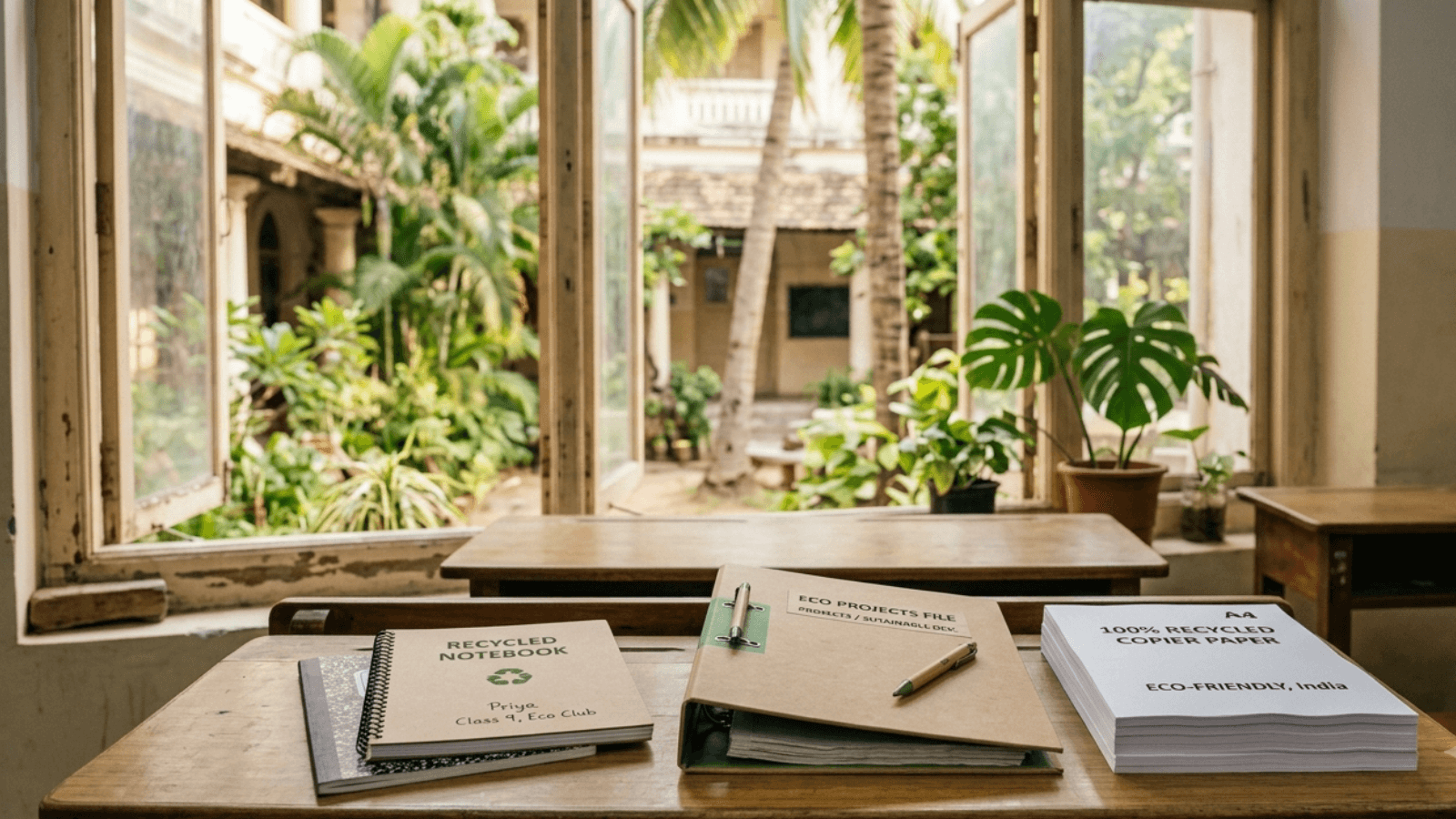
Recycled copier paper and notebooks make the biggest visible difference simply because paper is the highest volume item schools purchase throughout the year. Choosing recycled eco stationery for daily classroom use cuts down on fresh pulp demand without requiring any change in how students actually use the paper day to day. Refillable pens and pencils help too, though the impact is smaller per item and depends heavily on whether students and staff actually use the refill option rather than discarding the whole pen.
|
Stationery Item |
Waste Reduction Impact |
|
Recycled A4 copier paper |
Cuts virgin wood pulp use and lowers classroom paper waste over the year |
|
Recycled paperboard notebooks |
Reduces reliance on fresh cardboard covers without affecting durability |
|
Refillable pens over disposables |
Cuts plastic pen body waste significantly across a full academic year |
|
Recycled ring binder files |
Extends file life with a durable spine instead of frequent replacements |
Where Schools See the Most Practical Impact
Filing and record keeping is an often overlooked area where waste quietly builds up, since flimsy files get replaced far more often than sturdy ones. According to a broader overview of the environmental benefits of recycling paper products, documented on Wikipedia, recycled paper production generally requires less energy and fewer virgin materials than paper made from fresh wood pulp, which is a large part of why the switch matters at the volumes schools operate at.
|
School Practice |
Why It Reduces Waste |
|
Bulk ordering recycled paper termly |
Cuts packaging waste compared to frequent small orders |
|
Standardising on refillable stationery kits |
Reduces the volume of single use items replaced each term |
|
Setting up a paper scrap collection bin |
Allows offcuts to be reused for notes or recycled again |
Making the Switch Without Disrupting Daily Use
The easiest way to introduce eco friendly stationery is to start with the highest volume item first, usually copier paper and notebooks, before moving on to smaller changes like pens and files. Testing recycled paper in a single classroom or department for a term before a full switch helps confirm print and writing quality holds up as expected. Schools that phase the change in gradually tend to get better buy in from staff than those attempting a full switch overnight.
Getting genuine waste reduction from stationery choices comes down to picking items that are used often and replaced rarely, rather than chasing every product with an eco label attached. Recycled paper, durable filing, and refillable basics cover most of the actual volume a school works through in a year, which is where the real difference shows up on both cost and waste over time.