Understanding Fire Classes: Why One Extinguisher Type Does Not Fit All Fires
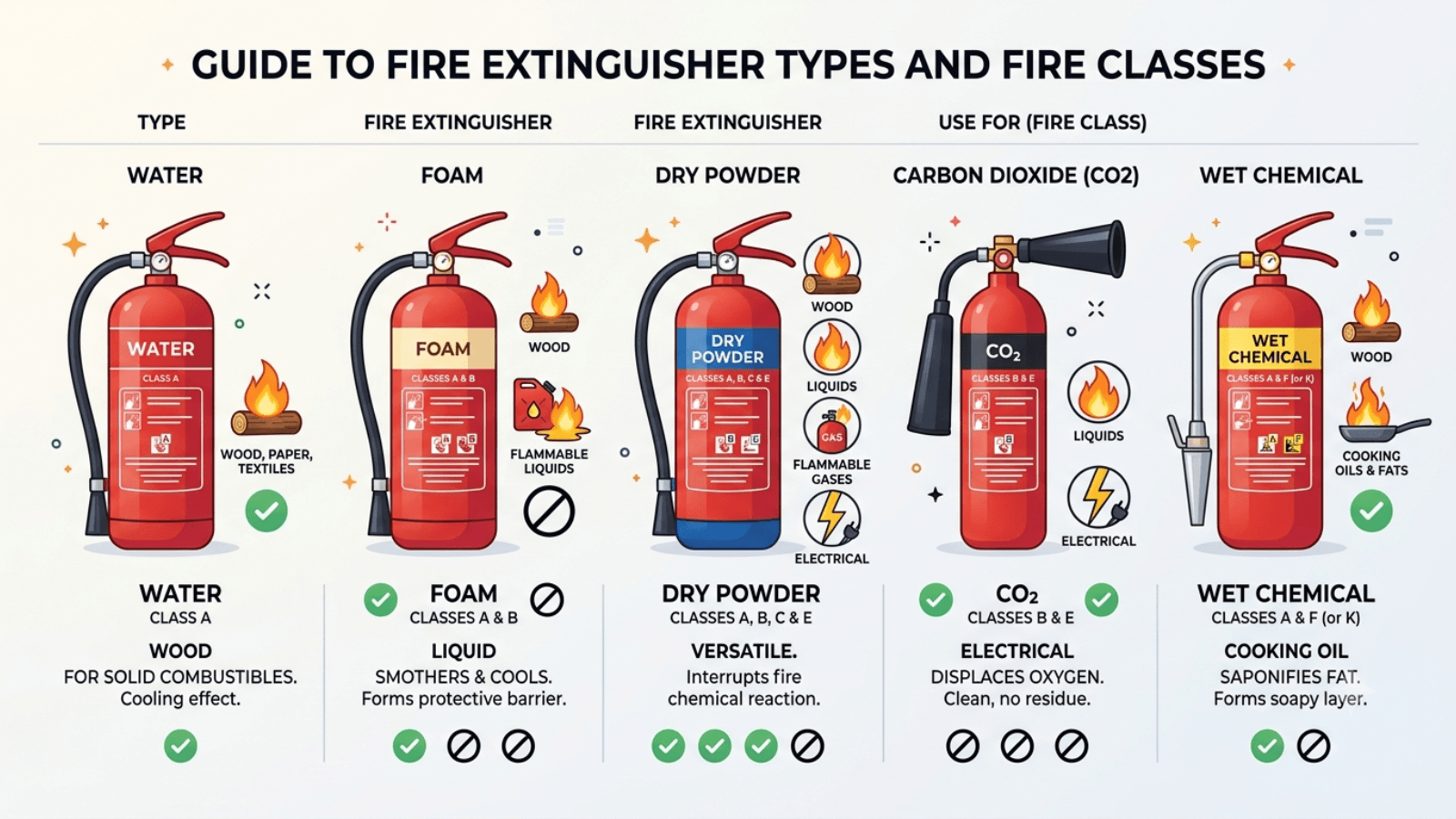
Walk into most Indian offices and you will find one fire extinguisher type covering the entire building, usually a general ABC unit picked because it sounded like the safe, all purpose choice. The problem is that fires are not all the same, and a class of extinguisher that works well on burning paper or fabric can be the wrong, sometimes dangerous, choice for an electrical panel or a kitchen fire involving cooking oil.
This guide explains what fire classes actually mean, why matching the extinguisher to the fire type is a safety requirement and not a technicality, and how to think about extinguisher selection across a typical office, warehouse, or facility environment.
The Mistake Most Offices Make
Fire safety planning often stops at buying enough extinguishers to satisfy a compliance checklist, without asking what those extinguishers are actually rated to handle. A building might have a server room, a pantry with cooking equipment, a warehouse storing packaging material, and a parking area, four very different fire risk zones that a single extinguisher type cannot safely cover.
The Five Fire Classes Explained
According to the National Fire Protection Association, fires are classified by what fuel is burning, because the correct way to put a fire out depends entirely on that fuel source.
|
Fire Class |
What Is Burning |
Extinguisher Type Needed |
|---|---|---|
|
Class A |
Wood, paper, cloth, ordinary combustibles |
Water, foam, or ABC dry chemical |
|
Class B |
Flammable liquids and gases, oil, solvents |
Foam, CO2, or dry chemical, never water |
|
Class C |
Energized electrical equipment and wiring |
CO2 or clean agent, never water based |
|
Class D |
Combustible metals used in industrial settings |
Specialised dry powder extinguishers only |
|
Class K |
Cooking oils and fats in kitchens |
Wet chemical extinguishers only |
Why Using The Wrong Extinguisher Is Dangerous, Not Just Ineffective
This is the part that gets missed most often. Using a water based extinguisher on an electrical fire creates a real risk of electrocution, since water conducts electricity back toward whoever is holding the extinguisher. Using water or foam on a cooking oil fire can cause the oil to violently splash or flare, spreading the fire rather than putting it out. A mismatched extinguisher does not just fail to help, it can actively make the situation worse in the seconds that matter most.
Matching Extinguishers To Real Office and Facility Zones
A practical way to plan extinguisher placement is by zone rather than by building. Server rooms and areas full of electronics need Class C rated protection, since water based extinguishers have no place near live equipment. Pantries and cafeterias with cooking appliances need Class K coverage, which general ABC units are not designed to handle safely. Warehouses storing packaging, cardboard, and paper stock are largely Class A risk, while any area storing solvents, cleaning chemicals, or fuel needs Class B coverage.
Multi rated extinguishers, most commonly ABC dry chemical units, cover the three most frequent classes in a single device and make sense for general office areas and corridors. But relying on ABC units alone in a kitchen or a server room is exactly the gap this guide is pointing at, those zones need their own specific rated equipment on top of general coverage.
What To Check Before You Buy
Before placing an order, map out the actual fire risk in each zone of the facility rather than buying a uniform batch of one extinguisher type. Check the rating label on any extinguisher you are considering, it will list the classes it covers directly on the unit. Facility and safety officers responsible for compliance should also confirm placement against maximum travel distance requirements, since an extinguisher that is rated correctly but stored too far from the risk area does not help much in an emergency.