Fire Extinguisher Maintenance Schedules: What Compliance Requires
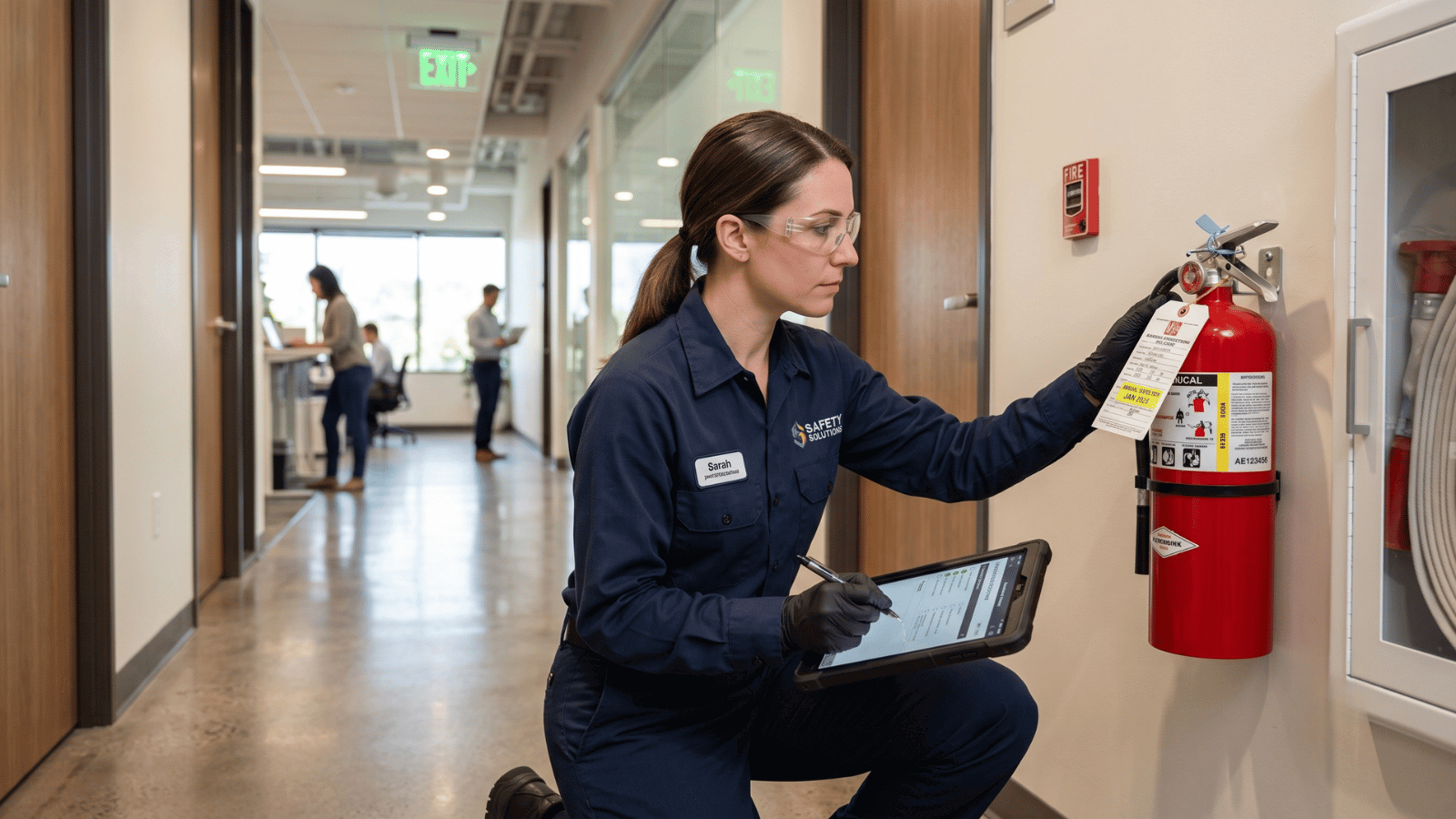
A fire extinguisher installed and forgotten is one of the more common compliance gaps facility managers discover during an audit, usually too late to fix before an inspection deadline. Maintenance requirements are specific and scheduled, not a one-time installation task, and understanding the actual cadence required removes most of the guesswork around staying compliant.
The Standard Maintenance Cadence
|
Check Type |
Frequency |
|---|---|
|
Visual inspection (pressure gauge, physical condition, accessibility) |
Monthly |
|
Detailed maintenance check by a certified technician |
Annually |
|
Internal examination and recharge (if applicable) |
Every 5 years, varies by extinguisher type |
|
Hydrostatic testing |
Every 5 to 12 years depending on extinguisher type and regulation |
What a Monthly Visual Check Actually Covers
Monthly checks do not require a certified technician and can be conducted by trained in-house staff, which is why they are the most frequently skipped requirement, since they feel less urgent than the annual professional service. A proper monthly check confirms the pressure gauge reads in the operable range, the extinguisher is not blocked or obstructed, the pin and tamper seal are intact, and there is no visible damage, corrosion, or leakage.
Annual Maintenance: What a Certified Technician Checks
- Internal condition assessment beyond what a visual check can catch, including checking for internal corrosion in older units.
- Weight verification for the extinguishing agent, confirming the unit still contains the correct amount.
- Mechanical parts function test, checking the discharge mechanism operates correctly under simulated conditions.
- Tag or certificate update, documenting the service date, which is what an inspector will check first during a compliance review.
Why the Documentation Matters as Much as the Service Itself
A serviced extinguisher without a properly updated tag or certificate can still trigger a compliance flag during an inspection, since inspectors rely on documented service dates rather than assuming maintenance happened. Keeping a centralised log, whether digital or a simple spreadsheet, that tracks every extinguisher's location, last service date, and next due date removes the risk of relying on memory or scattered paper tags across a facility.
Common Compliance Failures
|
Failure |
Why It Happens |
|---|---|
|
Missed monthly visual checks |
Treated as optional since no certified technician is required |
|
Expired service tags not renewed |
No centralised tracking system, relying on individual memory |
|
Wrong extinguisher type for the area's risk profile |
Original installation didn't match the space's actual fire risk |
|
Blocked or obstructed extinguisher access |
Inventory or furniture accumulating in front of the unit over time |
Building a Reliable Tracking System
For facilities with more than a handful of extinguishers, a simple spreadsheet with columns for location, extinguisher type, last service date, and next due date is often sufficient, provided someone owns the responsibility of updating it after every service visit. Larger facilities benefit from software-based tracking that sends automatic reminders before a due date, reducing the chance of a missed annual service slipping through unnoticed until an inspection catches it.
Matching Service Provider to Equipment Type
Different extinguisher types, CO2, dry powder, foam, wet chemical, have different maintenance specifics, and using a service provider unfamiliar with a specific type can result in incomplete checks that look compliant on paper but miss type-specific failure points. Dhuriyam's fire suppression products range is organised by extinguisher type specifically to help facility managers source both equipment and matching service expertise correctly rather than defaulting to a generic maintenance contract across all extinguisher types.
For a broader technical reference on how different extinguisher types work and why their maintenance requirements differ, the Wikipedia entry on fire extinguishers provides useful background, though local fire safety regulations should always be the authoritative source for specific compliance requirements in your jurisdiction.