Fire Risk Assessment: A Practical Framework for Small Businesses
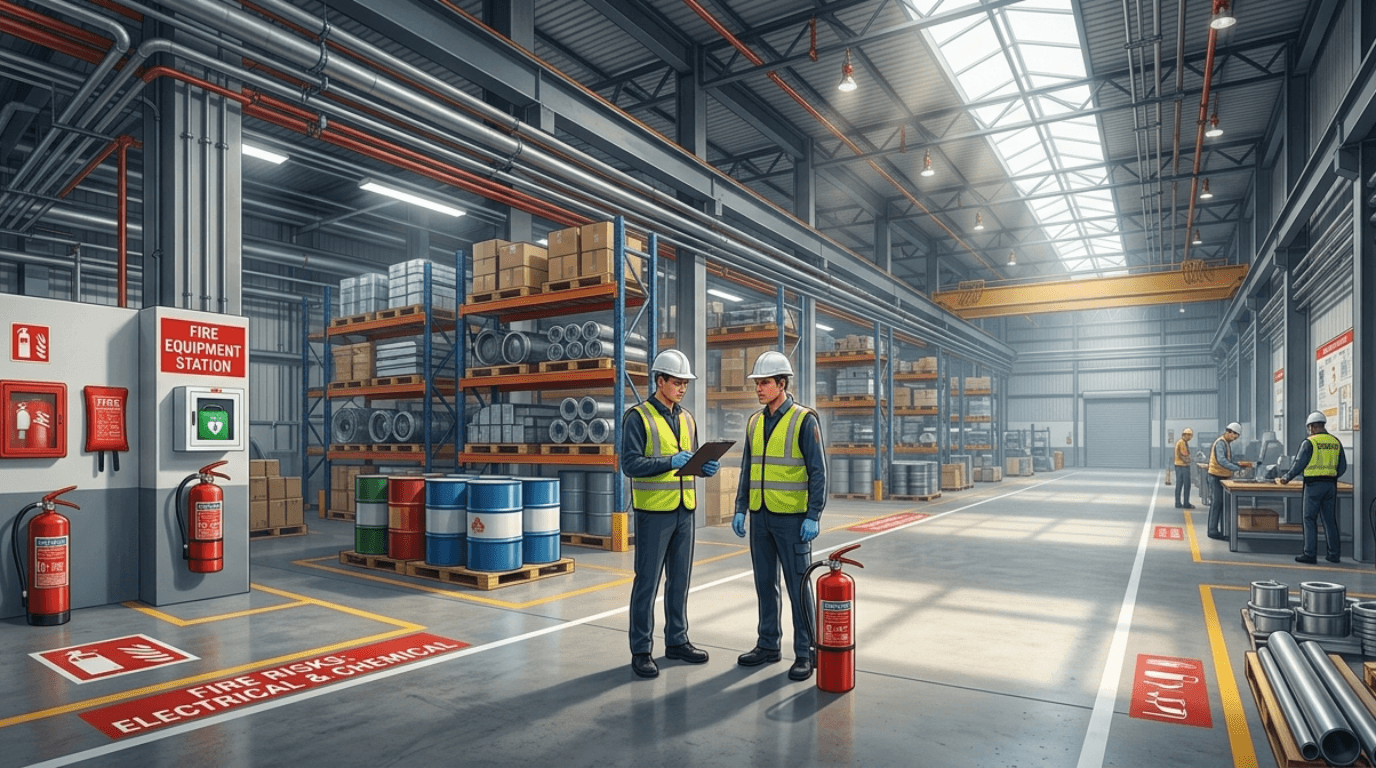
Fire risk assessment sounds like a compliance chore that gets scheduled once a year and forgotten about in between, but for small businesses, it is one of the more direct ways to prevent an incident that could shut operations down entirely. This guide lays out a practical framework you can actually follow without hiring a full-time safety officer, covering what to check, how often, and where most small businesses fall short.
What a Fire Risk Assessment Actually Covers
At its core, a fire risk assessment identifies fire hazards in a workplace, evaluates who is at risk, and checks whether existing precautions, extinguishers, alarms, escape routes, are adequate for the actual risk level. It is not a one-time checklist exercise; it is meant to be reviewed whenever the business changes, new equipment is installed, layout changes, or staff headcount grows significantly.
The Five-Step Framework
|
Step |
Focus Area |
|---|---|
|
1. Identify hazards |
Electrical equipment, flammable materials, storage areas, kitchen or workshop equipment |
|
2. Identify people at risk |
Staff, visitors, and anyone with reduced mobility who may need extra evacuation support |
|
3. Evaluate and reduce risk |
Check existing controls, add or upgrade suppression equipment where gaps exist |
|
4. Record findings |
Document the assessment, since most jurisdictions require written records for compliance |
|
5. Review and revise |
Reassess after any significant change, and at minimum on an annual schedule |
Common Hazards Small Businesses Overlook
- Overloaded electrical sockets, particularly around workstations with multiple devices sharing one extension board.
- Blocked or obstructed escape routes, often caused by stored inventory or furniture placed in corridors over time.
- Expired or missing fire extinguishers, since extinguishers are frequently installed once and never checked again until an inspection is due.
- Flammable storage near heat sources, common in workshops and kitchens where cleaning supplies or packaging materials sit too close to equipment.
- Untested fire alarms, particularly in smaller offices without a dedicated facilities team to run regular checks.
Matching Suppression Equipment to Risk Type
|
Fire Risk Type |
Recommended Suppression |
|---|---|
|
Electrical equipment fires |
CO2 or dry powder extinguishers, never water-based |
|
Flammable liquids and packaging |
Foam or dry powder extinguishers |
|
General office and paper-based risk |
Water or foam extinguishers, smoke detectors throughout |
|
Kitchen or food preparation areas |
Wet chemical extinguishers suited to cooking oil fires |
Getting the extinguisher type wrong is a more common mistake than having no extinguisher at all; a water extinguisher used on an electrical fire, for example, creates a serious shock hazard rather than putting the fire out safely. Dhuriyam's fire suppression products range is organised by application type specifically to help facility managers match equipment correctly rather than defaulting to a single extinguisher type across an entire building.
Building a Simple Compliance Calendar
Small businesses without a dedicated safety team tend to do better with a fixed, recurring calendar rather than relying on memory. A monthly visual check of extinguishers and escape routes, a quarterly alarm test, and a full annual reassessment covering the five-step framework above is a realistic cadence that most small teams can maintain without it becoming a burden.
Documentation and Compliance
Even where regulations do not strictly require written records for the smallest businesses, keeping a simple log of assessments, extinguisher inspection dates, and alarm tests protects the business in the event of an insurance claim or an incident investigation. It also makes onboarding new staff into fire safety procedures far easier, since there is an actual reference document rather than relying on verbal handovers. For a general overview of how fire risk assessment frameworks are structured across different regulatory contexts, the Wikipedia entry on fire safety provides useful background, though local regulations should always take precedence over general guidance.
Getting Started Without Overcomplicating It
For a business doing its first proper fire risk assessment, the goal is not perfection on day one. Walk the premises with the five-step framework in hand, note obvious gaps first, missing extinguishers, blocked exits, overloaded sockets, and address those before moving to more detailed hazard-by-hazard analysis. A basic assessment done consistently beats an elaborate one attempted once and never repeated.