Fire Suppression Systems for Kitchens: A Basic Guide for Restaurant Owners
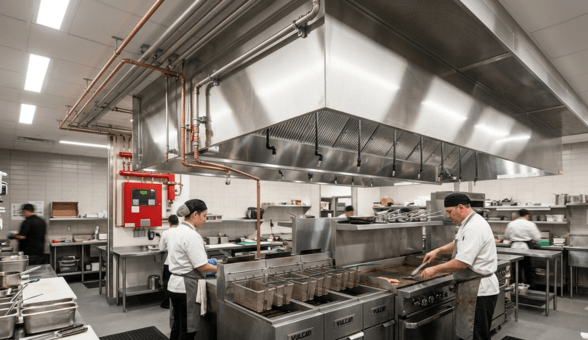
Commercial cooking equipment remains one of the leading causes of fires in restaurants and food service establishments, and a standard fire extinguisher is often too slow or too weak to control a grease fire once it spreads across a fryer or griddle line. This is why every commercial kitchen with open flame or grease producing equipment needs a dedicated fire suppression system, built and maintained to the requirements set out in NFPA 96, the standard most fire departments and insurers reference for commercial cooking fire protection. This guide covers the basics every restaurant owner should understand before choosing or maintaining one.
Why an Extinguisher Alone Is Not Enough
A portable fire extinguisher depends on a person noticing the fire, reaching the extinguisher, and applying it correctly within the first critical seconds. Grease fires can flare up faster than that response window allows, especially during a busy service when staff attention is split across multiple stations. A fixed suppression system removes that dependency on human reaction time by detecting heat automatically and releasing an agent designed specifically for grease fires, cooling the fuel surface and smothering the flame at the same time. Extinguishers still have a role as a backup and for small, contained flare ups, but they are not a substitute for a properly installed suppression system above the cooking line.
There is also a practical reason ordinary water based or general purpose extinguishers should never be the first response to a grease fire. Water reacts violently with burning oil, scattering flaming grease outward rather than putting it out, which is why kitchens rely on Class K extinguishers as a backup and a wet chemical suppression system as the primary defence. Understanding this distinction is often the first gap closed during a basic staff safety briefing, since it directly affects what a team member should and should not reach for in the first moment of a fire.
How a Kitchen Suppression System Actually Works
Most modern systems use a wet chemical agent, stored in a tank connected to a network of nozzles positioned above fryers, griddles, ranges, and the exhaust hood itself. Heat sensitive links or detectors trigger the system automatically once temperatures cross a set threshold, releasing the agent in a fine mist that cools burning oil rapidly while forming a soap like layer on the surface that starves the fire of oxygen. The same trigger typically shuts off gas or electrical supply to the affected appliances, preventing the fire from reigniting once the agent has done its work. Staff can also trigger the system manually through a pull station if a fire is spotted before the automatic detection threshold is reached.
Core Components of a Kitchen Suppression System
A typical installation is made up of a small number of parts working together, summarised below.
|
Component |
Function |
|
Wet chemical agent tank |
Stores the agent that cools and smothers grease fires on contact |
|
Nozzles over the cooking line |
Direct agent precisely onto fryers, griddles, and the hood plenum |
|
Detection and actuation |
Fusible links or heat sensors that trigger release automatically |
|
Manual pull station |
Lets kitchen staff trigger the system by hand if noticed early |
|
Fuel and gas shutoff |
Cuts gas or electric supply to appliances the moment it fires |
Matching System Size to Your Kitchen
The right system size depends on the number of appliances under the hood, the type of cooking equipment in use, and the layout of your exhaust system. A single fryer station needs a very different nozzle configuration compared to a full commercial line with multiple griddles, ranges, and a char broiler running side by side. Reviewing your kitchen layout against a fire suppression product range built for commercial kitchens is a useful starting point before finalising a system with an installer, since undersized coverage is one of the more common compliance gaps found during inspections.
Compliance Basics Every Restaurant Owner Should Know
Local fire codes generally adopt NFPA 96 or an equivalent standard, which means the requirements are enforced by local fire marshals rather than being optional guidance. Insurance providers also frequently reference the same standard, and a kitchen without a compliant, documented, and regularly serviced suppression system can face higher premiums or complications during a claim. Compliance is not a one time installation event either, inspection records need to be kept on file and made available during routine fire safety checks, so working with a registered vendor who documents service visits properly matters as much as the system itself.
New restaurant owners setting up a kitchen for the first time often assume the exhaust contractor or kitchen equipment vendor automatically includes suppression system compliance in their scope, which is frequently not the case. It is worth confirming, in writing, exactly who is responsible for the initial system design, the local fire department approval, and the first scheduled inspection, rather than discovering a gap only when a health or fire inspector visits after opening.
A Simple Maintenance and Inspection Schedule
Keeping a system compliant and functional over time comes down to a small set of recurring tasks, shown here as a starting reference.
|
Task |
Recommended Frequency |
|
Professional system inspection |
Every six months |
|
Hood and duct grease cleaning |
Monthly to quarterly, based on cooking volume |
|
Nozzle and fusible link check |
At every scheduled inspection |
|
Staff refresher on manual pull station |
Every three to six months |
Grease buildup inside hoods and ducts is one of the most overlooked risks, since a suppression system can still fire correctly and the fire can spread through an unclean duct regardless. Pairing suppression maintenance with a regular hood and duct cleaning schedule closes this gap rather than treating the two as separate concerns. Keeping dated service tags visible on the tank itself also makes it far easier to answer an inspector's first question without digging through paperwork on the spot.
Common Gaps Restaurant Owners Overlook
A few patterns show up repeatedly during kitchen fire safety reviews. Systems installed years ago but never reassessed after new equipment was added under the same hood, inspection tags that have quietly expired without anyone noticing, and staff who have never actually practiced using the manual pull station because training happened once during onboarding and was never repeated. None of these gaps are expensive to fix on their own, but each one reduces how effectively the system performs during an actual fire, which is precisely when performance matters most.
Kitchen renovations are another common trigger point. Adding a new fryer, repositioning a griddle, or extending the cooking line often changes the coverage a suppression system needs to provide, yet these changes rarely prompt an automatic reassessment unless the owner specifically requests one from their vendor. Any time equipment under the hood changes, it is worth treating that as a signal to have the suppression coverage reviewed alongside the exhaust system, rather than assuming the original installation still applies.
Training Staff for the First Sixty Seconds
A suppression system only works well when kitchen staff know what to do the moment it activates. This includes knowing where the manual pull station is located, understanding that the gas supply will cut off automatically, and knowing to evacuate the immediate area rather than attempting to fight a fire that the system is already suppressing. A short, repeated training session, walked through during a quiet shift rather than left as a one line item in an onboarding checklist, tends to make the biggest difference in how calmly a kitchen team responds when an actual activation happens.
It also helps to walk new hires through what happens after activation, since the wet chemical agent leaves a soapy residue across the cooking surface and hood that needs proper cleanup before the kitchen reopens for service. Staff who expect this and know it is a normal part of the system doing its job tend to stay calmer and follow the post activation checklist correctly, rather than treating the residue itself as a second emergency.
A fire suppression system is one of the few pieces of kitchen equipment restaurant owners hope to never actually use, which is exactly why it deserves the same attention as the appliances running every single day. Choosing the right coverage, keeping inspection records current, and making sure staff know the basics closes most of the gaps that turn a manageable flare up into a serious incident.