Recycled Paper Cups: Coating Types and Food Safety
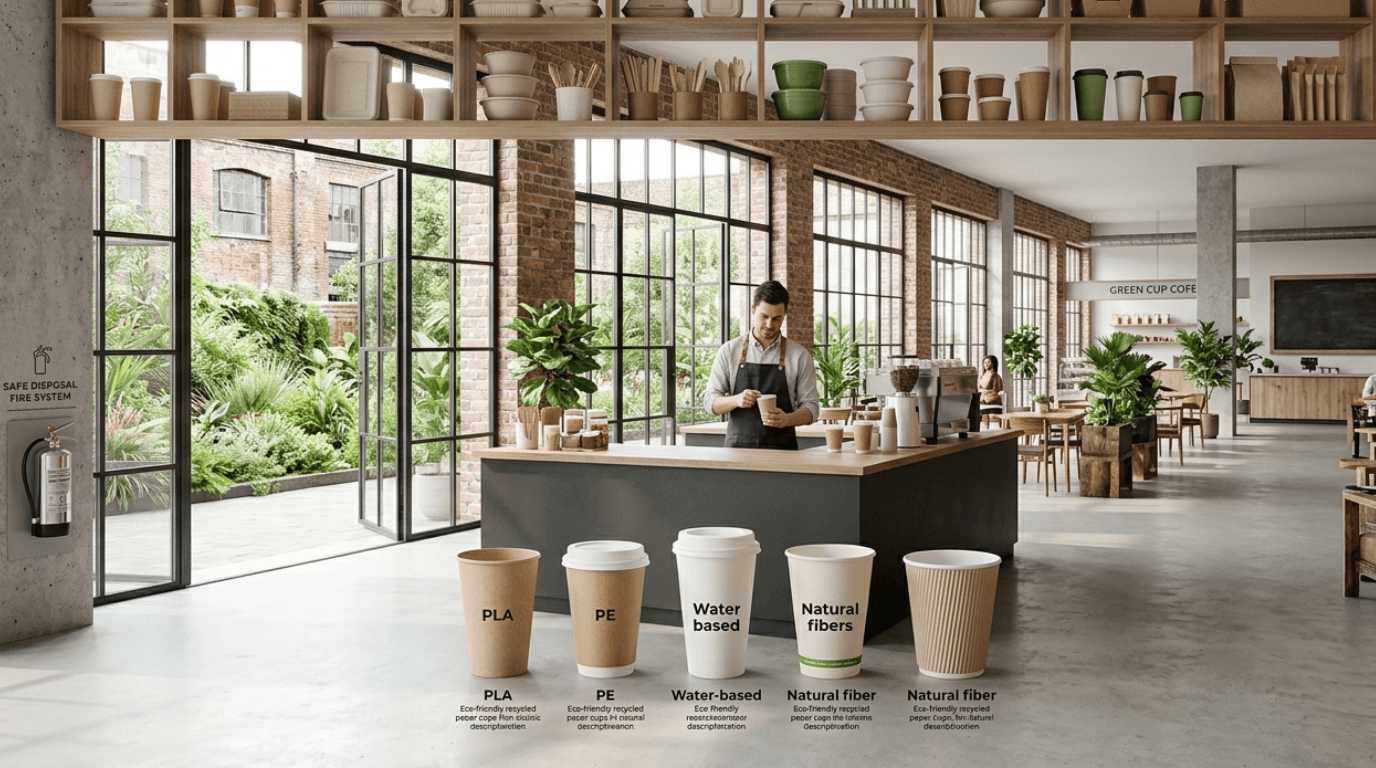
Recycled paper cup coating safety is a genuinely important detail procurement teams overlook when sourcing eco-friendly disposables, often assuming that "recycled" and "food safe" mean the same thing by default. They do not automatically align, and understanding what coating is used, and whether it is certified for food contact, matters just as much as the recycled content claim itself.
Why Paper Cups Need a Coating At All
Plain paper is not waterproof, and without an internal coating, a paper cup would simply soften and leak within minutes of holding a hot or cold beverage. The coating creates a barrier layer between the liquid and the paper fibre itself, and this is exactly where the food safety question becomes relevant, since the coating is what actually touches the beverage a customer drinks, not the recycled paper fibre underneath it.
This is a critical distinction procurement teams should keep in mind: a cup can be made from genuinely high-quality recycled paper fibre while still using a coating that is either poorly certified or entirely unsuited to food contact use, so evaluating the two components separately gives a more accurate picture of overall safety.
Common Coating Types Used Today
Polyethylene, or PE, coating remains one of the most common options due to its low cost and reliable moisture resistance, though it is not compostable and complicates recycling, since separating the plastic coating from the paper fibre requires specialised facilities most standard recycling streams do not have. PLA coating, a plant-based bioplastic, offers a compostable alternative and has grown in popularity specifically among businesses pursuing genuine sustainability claims, though it generally requires industrial composting to break down within its advertised timeframe, similar to other PLA-based products.
Newer water-based or aqueous coatings have also entered the market, offering both recyclability and compostability in some formulations, though performance under hot liquids can vary more between suppliers compared to the more established PE and PLA options.
|
Coating Type |
Food Safe Status |
End of Life |
|
Polyethylene (PE) |
Widely certified, established use |
Not compostable, hard to recycle |
|
PLA (bioplastic) |
Food safe when certified |
Industrial compost required |
|
Water-based aqueous |
Varies, check certification |
Recyclable or compostable, varies |
[custom_form_block title="Request eco packaging samples now"]
Checking Food Safe Paper Cup Coating Certification
Regardless of coating type, confirming food-grade certification specific to your market is the single most important check before placing a bulk order. In India, this generally means checking for FSSAI compliance, which covers food contact material safety, and any recognised international certification the coating manufacturer may hold if it is imported. A supplier unable to provide clear certification documentation on request is worth treating with caution, regardless of how confidently the product is marketed as food safe.
According to the Food Safety and Standards Authority of India's guidance on packaging materials, materials that come into direct contact with food or beverages are subject to specific safety standards, which applies directly to the coating layer inside any paper cup regardless of what the outer paper is made from.
Recycled Cup Material Guide: What to Ask Suppliers
A short but useful checklist before finalising a bulk order includes asking for the specific coating type used, requesting food-grade certification documentation, confirming whether the coating is suited for hot, cold, or both beverage types, and checking whether the cup's end-of-life disposal, recycling or composting, matches your business's actual waste management capability rather than an idealised scenario. This last point matters particularly if your business is making public claims about sustainability, since a compostable cup that ends up in general landfill because your local waste stream has no industrial composting access undermines the environmental benefit the product was meant to provide.
Getting these details confirmed upfront, before committing to a large order, avoids the more costly problem of discovering a compliance or performance issue only after cups are already in active use at your business.