Switching to Recycled Paperboard Files: What Institutions Should Know
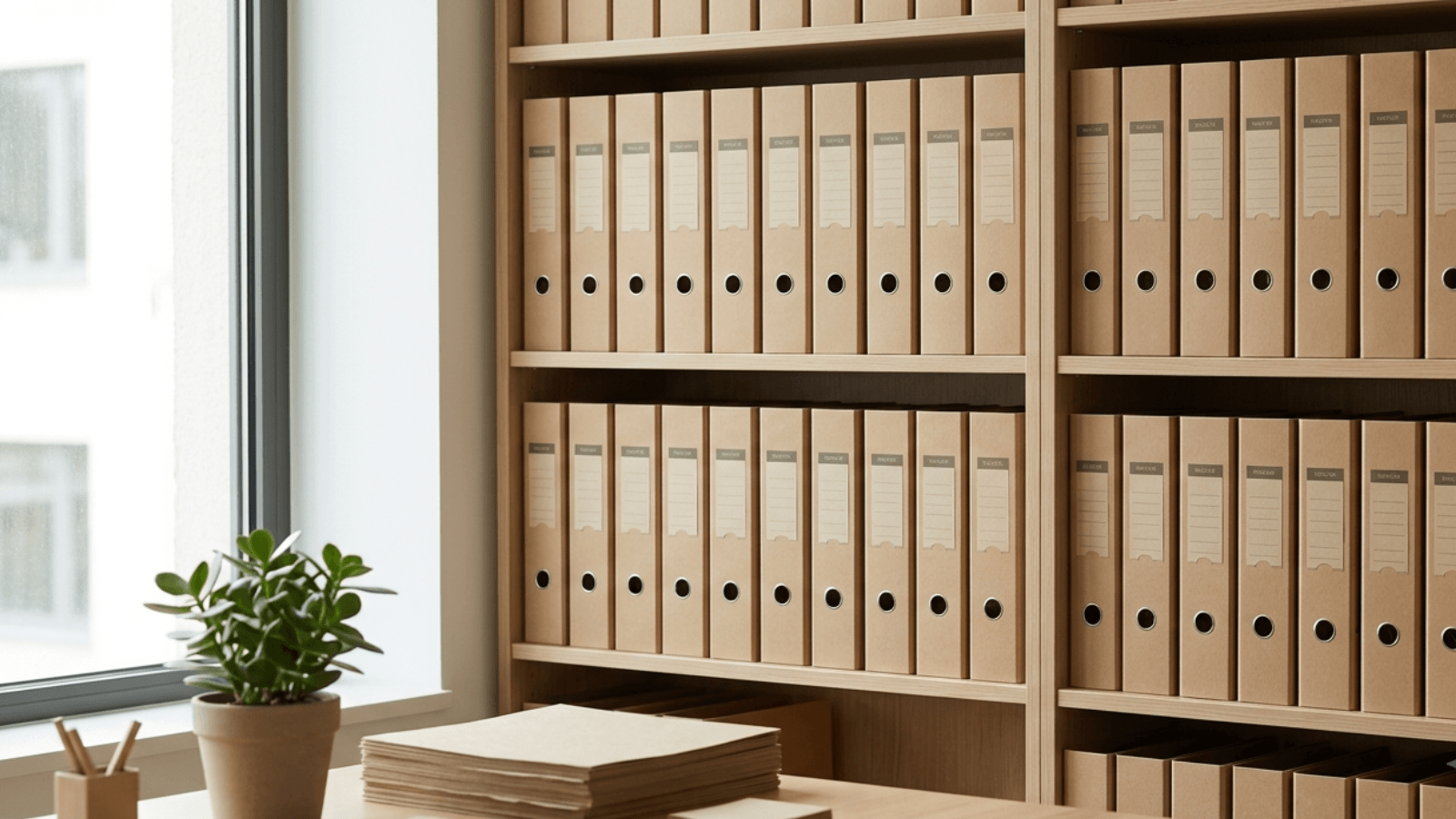
Schools, colleges, and government offices go through an enormous number of ring binder files and record folders every year. For most institutions, the material these files are made from has never been a question worth asking. That is changing. Procurement teams are increasingly being asked to justify their paper purchases against sustainability targets, and recycled paperboard files are one of the simplest switches an institution can make without disrupting existing filing systems or budgets.
Before making the switch, it helps to understand what recycled paperboard actually is, how it performs against regular files in daily use, and what to check before placing a bulk institutional order. This matters especially for institutions that manage large volumes of physical records over long retention periods, where the choice of filing material is not just a sustainability decision but also a practical one about durability and cost over time.
What Recycled Paperboard Files Are Made Of
Recycled paperboard files are built from paperboard that has been reprocessed from recovered paper waste rather than virgin wood pulp. The material is compressed into a rigid board, then finished with a durable cover, typically kraft, and fitted with a metal ring mechanism for holding punched pages. The manufacturing process uses less energy and water than producing paperboard from raw wood fibre, and it keeps paper waste out of landfills by feeding it back into new products.
This is different from paper that is simply labelled eco-friendly without any verification. Credible recycled paperboard should be traceable back to its source, and independent labelling systems such as the FSC Recycled label exist specifically to confirm that a product genuinely contains reclaimed material rather than relying on the term loosely for marketing purposes.
How Recycled Files Perform Compared to Regular Ones
The most common concern institutions raise is whether recycled paperboard is sturdy enough for daily handling in a busy office or classroom. In practice, well-made recycled paperboard files hold up comparably to virgin paperboard for standard filing use. The rigidity comes from the density of the compressed board and the reinforcement at the spine, not from whether the fibre is new or reclaimed.
Where a difference can show up is in moisture resistance and colour consistency, since recycled fibre can vary slightly between batches. This is rarely a problem for standard record storage, but it is worth checking a sample file before committing to a large order, particularly if the files will be stored in humid conditions such as ground floor archives or coastal region offices.
Regular vs Recycled Paperboard Files
|
Factor |
Regular Paperboard |
Recycled Paperboard |
|---|---|---|
|
Material source |
Virgin wood pulp |
Reclaimed paper waste |
|
Durability for filing use |
High |
Comparable for standard use |
|
Environmental impact |
Higher resource use |
Lower water and energy use |
Cost Considerations for Institutional Buyers
Recycled paperboard files are sometimes priced slightly higher per unit than conventional ones, largely due to the collection and reprocessing steps involved in sourcing recycled fibre. For institutions ordering in bulk, this difference narrows considerably, and many suppliers offer volume-based pricing that brings recycled options close to parity with standard files once order quantities cross a few hundred units.
It helps to request a like-for-like quote comparing recycled and standard files at the exact quantity your institution typically orders, rather than relying on general price comparisons that do not reflect your actual procurement scale.
What to Check Before Placing a Bulk Order
A few checks before ordering can prevent a mismatch between what is delivered and what your institution actually needs on the shelf.
Pre-Order Checklist
|
Check |
Why It Matters |
|---|---|
|
Sample unit review |
Confirms rigidity, spine strength, and finish quality |
|
Recycled content proof |
Avoids paying a premium for unverified claims |
|
Ring mechanism quality |
Prevents early wear during frequent use |
|
Bulk pricing tiers |
Ensures the best rate at your actual order volume |
Verifying Certification Claims
Not every product marked recycled or eco-friendly carries independent verification behind that claim. Some suppliers use the terms loosely to describe a general sustainability effort rather than a certified recycled content percentage. For institutional buyers, particularly those reporting sustainability metrics to a board, trust, or government body, it is worth asking suppliers directly what percentage of the paperboard is reclaimed material and whether that figure is backed by a recognised certification rather than a marketing statement.
The distinction matters most when institutions are required to report actual sustainability figures rather than general intentions. A supplier who can point to a specific certification and percentage gives procurement teams a defensible number to include in annual reporting, while a vague eco-friendly label does not hold up under scrutiny.
Where Institutions Typically Start the Switch
Most institutions do not convert their entire filing system in one order. A more practical approach is to start with one department or one type of record, such as new admissions files or annual audit folders, and observe how the recycled files hold up over a full term or fiscal cycle before expanding the order across the institution.
Dhuriyam Corp's own recycled ring binder file range is built specifically around this kind of gradual institutional switch, with a reinforced spine and kraft cover designed for repeated use in schools and offices rather than one-time or archival storage. The broader eco stationery and paperboard catalogue is worth reviewing alongside it if your institution is also looking at recycled copier paper or other paper-based supplies as part of the same procurement cycle.
Storage and Handling Considerations
Once files are in use, storage conditions matter more for recycled paperboard than they do for premium virgin board, simply because reclaimed fibre can be marginally more sensitive to sustained damp conditions. Storing files on raised shelving rather than directly on the floor, and keeping archive rooms reasonably ventilated, extends the working life of any paperboard file, recycled or otherwise, but is worth flagging specifically when introducing a new material into an existing storage room.
Institutions that store records for statutory retention periods of five years or more should ask suppliers directly about expected shelf life under normal office conditions, rather than assuming recycled and virgin paperboard behave identically over long storage horizons.
Training Staff on the New Filing Material
A short internal briefing for administrative staff, even five minutes at a team meeting, helps avoid confusion when the new files first arrive. Cover three points: the files are functionally the same to use, the material is now sourced from recycled paperboard, and any visible variation in shade between individual files is normal and does not indicate a lower quality batch.
This kind of small communication step reduces the chances of staff assuming a defect when they notice natural colour variation, which is one of the more common points of confusion institutions report after switching material types without any prior notice.
Handling the Transition Internally
A switch like this tends to go smoothly when procurement teams communicate it clearly to the staff who will use the files daily, rather than simply swapping the stock without notice. A short note explaining that the files are now sourced from recycled paperboard, along with reassurance that durability has been tested, prevents the assumption that the change was made purely to cut costs.
For institutions reporting on sustainability initiatives, even a small switch like filing supplies can be documented as a measurable step, particularly when the recycled content is backed by a verifiable label rather than a general claim on the packaging.
Comparing Suppliers Before You Commit
Institutions rarely benefit from choosing the first recycled paperboard supplier they come across. A short comparison across two or three vendors, looking specifically at recycled content percentage, ring mechanism build quality, spine reinforcement, and bulk pricing, gives procurement teams a clearer basis for the decision than relying on a single quote.
It is also reasonable to ask any shortlisted supplier for a small trial batch before signing a larger purchase order. A trial run of twenty to fifty units, tested across a few weeks of normal office handling, tells you more about real-world durability than any specification sheet can.
Recycled paperboard files are one of the easier sustainability switches available to schools, colleges, and offices, mainly because they do not require any change to how records are organised or stored. The only real work involved is checking the material claims, testing a sample batch, and rolling out the change department by department rather than all at once.